


Why we built custom databases first
Every business of one is shaped a little differently. Rigid tools don't survive contact with that.
 6 minFebruary 20, 2026
Of everything Clarivy could have started with, custom databases weren't the obvious choice. Analytics is the flashier pitch. Reports feel more finished. But databases came first, and here's why.
Every business of one is shaped differently
A designer tracking clients and deliverables needs something different than a consultant tracking retainers, or a videographer tracking gear and shoot dates. Off-the-shelf CRMs handle this by picking one shape and forcing everyone into it — contacts, deals, stages, whether that maps to your business or not.
That's fine if your business happens to fit the mold. Most don't. And the moment it doesn't fit, you end up with fields nobody uses, workflows you route around, and eventually a spreadsheet on the side doing the actual work — which defeats the point of having the tool at all.
So we started with the shape, not the features
Custom databases mean you define what a "client," a "project," or a "lead" actually looks like for your business, instead of adapting to someone else's definition. Add the fields that matter, drop the ones that don't, and connect records the way your work actually flows — a client to their projects, a project to its invoices, however that looks for you.
It's closer to Notion than to a traditional CRM in that sense — flexible, structural, yours to shape. The difference is that it's built specifically for the CRM and business-intelligence side of things, not general note-taking stretched to fit.
Why this had to come before analytics
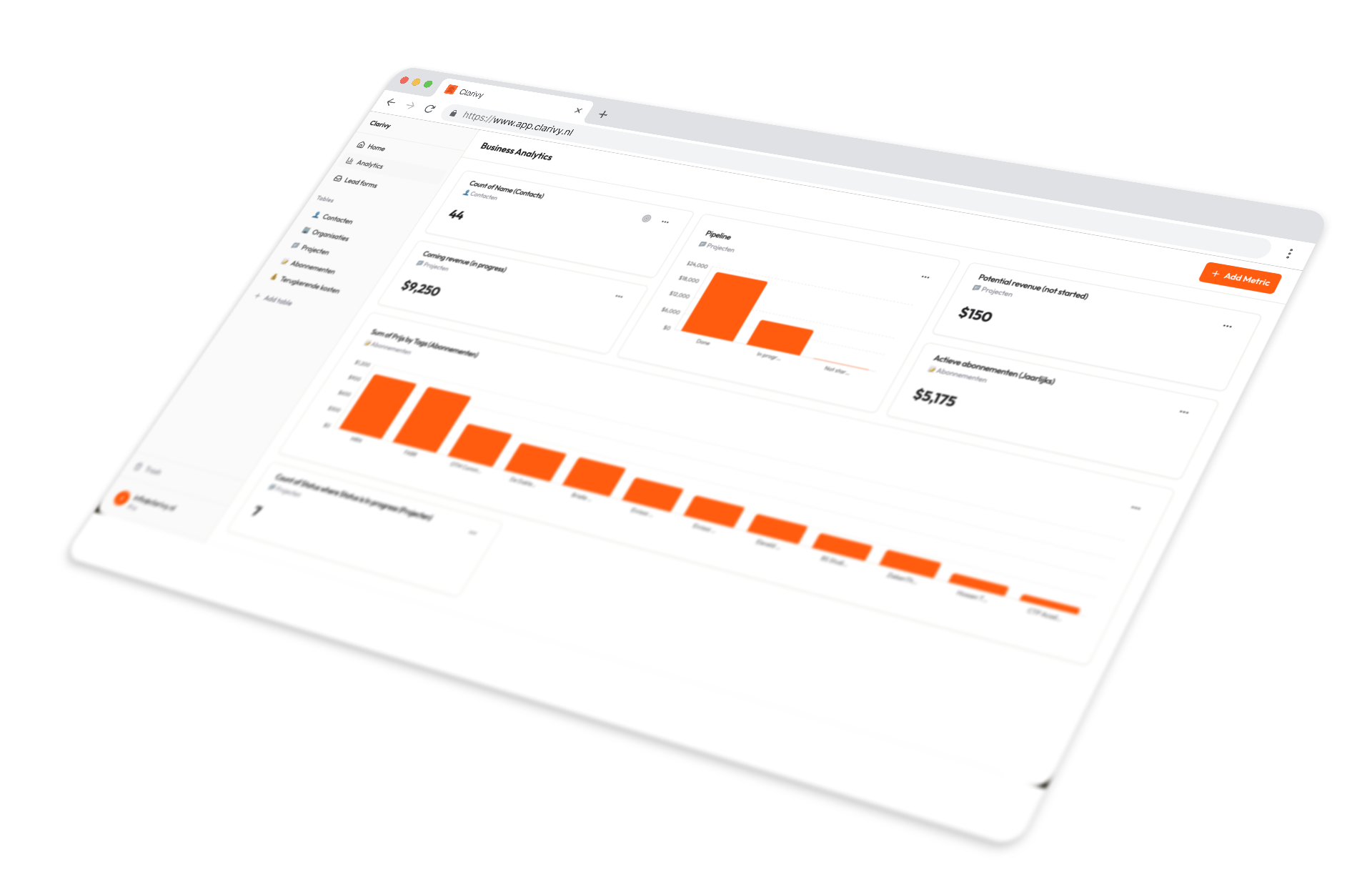
Analytics and reports are only as good as the data underneath them. Build the dashboards first and you end up designing around whatever a generic schema happens to capture, instead of what actually matters to your business. Get the data model right — flexible enough to fit how you actually work — and the business analytics and recurring reports coming next can show you something honest, not just something that fits a template.
That's the order we're building in: the foundation first, so everything after it actually means something.

Stop guessing how your business is doing